About Me
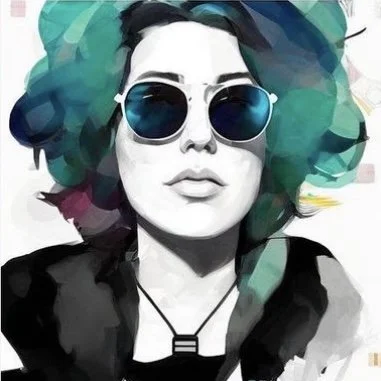
Background
Words have always been my thing. Family lore has it I read the word "metamorphosis" from my stroller (though to be fair, my grandma might have made that up). From advanced reading and writing at an early age, to getting an English degree in college, it's no surprise that my career has been all about content for over a decade.
The thing is, the world where my career started no longer exists. AI changed the way we do everything, and content operations is no exception. (I always imagined the robot apocalypse would look more like Terminator than Office Space, but here we are.) I work with AI as a tool, not a threat. I use it strategically to scale documentation, automate repetitive tasks, and make processes more efficient without sacrificing quality or humanity.
My background has a little of everything, from quality assurance and technical writing to knowledge management and operations. I specialize in documentation, workflow optimization, and process design, but I'm adaptable to all kinds of content challenges. I'm versed in modern tooling and can pick up new applications quickly.
If you're looking for the depth of experience to tackle complex content operations challenges, the technical adaptability to evolve with the changing times, and the systems thinking to design solutions that last, you've come to the right place.
Education
I was halfway through an AS in Business Administration at Florida State College Jacksonville when it hit me: accounting classes made me want to cry. I recall a conversation where I said something along the lines of, “I love writing papers. It doesn’t even feel like work!” And just like that, I’d answered my own question about which major to pick.
After receiving my AA with honors in English (minor in Business Admin), I matriculated into the University of Central Florida’s College of Arts and Humanities, where I studied Technical and Professional Writing.
Unlike other English majors that focus on lit and poetry, the Tech Writing track explored writing for the worlds of business and science.
We learned how to research and present complex topics to any audience, avoiding pitfalls like the “curse of knowledge” (wherein an expert on a subject is unable to explain it because they’ve forgotten what it’s like to be a novice). We learned all about top-down processing, information architecture, critical analysis, cognitive bias, and virtual communication. I thrived in the fully remote educational environment, and eagerly applied the concepts I learned to my professional life.
There’s that joke, “I got an English degree, and now I’m a barista!” But I’m proud to say I’ve always worked in my field in one way or another. I think it’s safe to say I’ve made my English degree work for me.
Standout Skills
My niche lies at the intersection of left-brained pragmatism and right-brained vision. I've got creativity for days, with the initiative to set plans into motion, the admin skills to project manage from start to finish, and the follow-through to get the job done.
I can see the big picture, break it down into its smaller parts, and navigate complex projects using a combination of agile and waterfall methodology. (Ask me about the time I designed an entire Scrumban workflow for my operations team.) When I encounter pain points, I find outside-the-box solutions. My natural inclination is to make workflows as streamlined and efficient as possible, allowing plenty of space for creativity while hitting targets and meeting deadlines.
I'm known for my tech writing expertise, love of process, attention to detail, and clear communication. Colleagues and managers alike agree that I'm organized, proactive, and care a great deal about everything I do. (Word on the street is they even think I’m fun to work with.)
Advocacy
I’m an advocate and champion for neuro-inclusion. We’ve come a long way since I entered the workforce, but there’s still plenty of work to be done.
In 2018, I founded Mailchimp’s employer-sponsored business resource group, the Disability & Neurodiversity Alliance. For 18 months I served as Founding Chair, leading a small team of volunteers to support those living with or affected by disability and neurodiversity.
We organized a number of events and gave a voice to workplace matters related to mental health. For my efforts on this innovative endeavor, I was honored with the Q3 2018 Support Values Award for Empowering People.
For me, neuro-inclusion isn’t just for the workplace. I strive to live in alignment with my values in all areas of life, even when it’s uncomfortable or inconvenient. The right work environment for me is one where the employer walks the walk when it comes to equity in the workplace and beyond.